How to Clean a Portable Air Conditioner (Step-by-Step Guide)
A dirty portable air conditioner doesn’t just perform worse — it can spread dust, mold spores, and allergens through your air. The good news: cleaning one takes less than an hour and requires no special tools. This guide covers everything from a quick weekly wipe-down to a thorough deep clean at the start of each season.
What You’ll Need
- Soft cloth or microfiber towel
- Vacuum with brush attachment
- Mild dish soap
- Warm water
- Small bucket or sink
- Fin comb (optional, for coil cleaning)
- Compressed air can (optional)
How Often Should You Clean Your portable air conditioner?
| Task | Frequency |
|---|---|
| Clean or rinse air filter | Every 2 weeks during heavy use |
| Wipe exterior and vents | Monthly |
| Check and empty water tank | Weekly (or when indicator lights up) |
| Deep clean (coils, drain pan) | Once per season (start of summer) |
Skipping filter cleaning is the most common mistake — a clogged filter can reduce cooling efficiency by 20–30% and make the unit work harder, shortening its lifespan.
Step 1 — Turn Off and Unplug the Unit
Before doing anything, power off the unit using its controls and unplug it from the wall. Never clean a running or plugged-in appliance.
Wait 15–20 minutes for internal components to cool down and for any remaining moisture to settle.
Step 2 — Remove and Clean the Air Filter
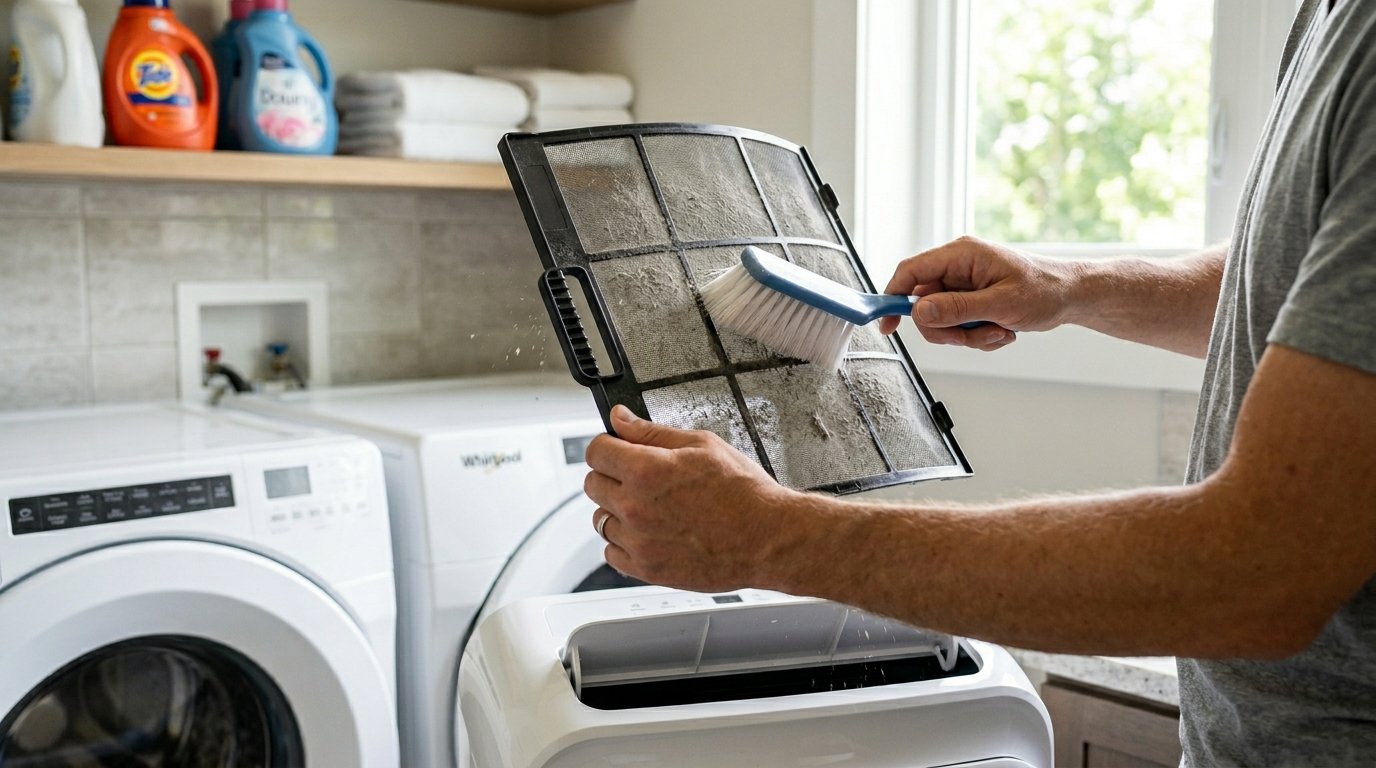
The air filter is usually located on the back or side panel of the unit. On most models:
1. Slide or pop off the filter panel cover
2. Pull out the filter (it may be one piece or two)
3. Tap it gently over a trash can to dislodge loose dust
4. Rinse under warm running water — do not use soap unless the filter is greasy or visibly dirty
5. For stubborn buildup, use a soft brush and mild dish soap, then rinse thoroughly
6. Shake off excess water and let it air dry completely before reinserting
Critical: Never reinsert a wet filter. A damp filter promotes mold growth and can damage internal components. Let it dry at least 1–2 hours, or use a fan to speed up drying.
Step 3 — Wipe Down the Exterior
Use a damp microfiber cloth to wipe the exterior housing, top panel, and air intake/outlet vents. For vents with narrow slots, a soft brush or compressed air works well to clear dust buildup.
Avoid using harsh chemical cleaners, abrasive sponges, or spraying water directly on the unit. A small amount of mild dish soap on the cloth is fine for sticky residue.
Step 4 — Clean the Exhaust Hose
The exhaust hose collects dust and debris over time, which can restrict airflow. To clean it:
1. Disconnect both ends of the hose
2. Hold it up to a light — you should be able to see through it clearly
3. Use a vacuum with the hose attachment to pull debris from each end
4. If visibly dirty inside, run warm water through it and let it dry fully before reattaching
Check the hose for cracks or holes at the same time. A damaged hose leaks hot air back into the room, making your AC work harder.
Step 5 — Empty and Clean the Water Tank
Portable ACs collect condensation from the air. Depending on your model, this water either:
- Evaporates automatically (self-evaporating models) — still check the drain pan
- Collects in a tank — needs to be emptied regularly
To clean the tank:
1. Remove the drain plug and empty any standing water
2. Rinse the tank with clean water
3. If you notice slime, mineral deposits, or odor, fill the tank with a 50/50 solution of white vinegar and water
4. Let it sit for 30 minutes, then rinse thoroughly
5. Replace the drain plug and reattach the tank
Leaving standing water in the tank is the #1 cause of musty odors and mold growth in portable ACs.
Step 6 — Clean the Evaporator Coils (Deep Clean)
This step is for the once-per-season deep clean, not routine maintenance. The evaporator coils are the metal fins inside the unit that actually cool the air. Over time, they collect dust and can develop mold in humid climates.
To access and clean the coils:
1. Check your manual for the service panel location (usually the back)
2. Remove the service panel with a screwdriver
3. Use a soft brush attachment on your vacuum to gently remove dust from the fins — always brush in the direction of the fins, never across them
4. For mold or heavy buildup, use a no-rinse coil cleaner spray (available at hardware stores)
5. Let the coil cleaner foam and drip into the drain pan — it’s designed to be self-rinsing
If fins are bent (which restricts airflow), use a fin comb to carefully straighten them.
Step 7 — Reassemble and Test
Once everything is dry and clean:
1. Reinsert the dry air filter
2. Replace any panels you removed
3. Reconnect the exhaust hose
4. Plug in the unit
5. Run it for 10 minutes and check for normal operation
Your AC should feel noticeably more powerful after a good cleaning — especially if the filter was heavily clogged.
Signs Your portable air conditioner Needs Cleaning Now
Don’t wait for your scheduled cleaning if you notice:
- Reduced airflow — room takes much longer to cool
- Musty or moldy smell when the unit is running
- Water leaking from the unit (clogged drain line)
- Ice buildup on the coils (restricted airflow from dirty filter)
- Unit turning on and off frequently (can indicate overheating from poor airflow)
Storing Your Portable AC for Winter
When the cooling season ends:
1. Run the unit in fan-only mode for 24–48 hours to dry out internal moisture
2. Clean the filter and let it dry
3. Empty the water tank completely
4. Cover the intake and exhaust vents with tape or plastic to keep out dust and pests
5. Store upright in a cool, dry location
Never store a portable AC on its side or upside-down — this can damage the compressor.
Keeping your unit clean is also directly tied to energy use — ENERGY STAR maintenance tips show that a well-maintained AC unit uses up to 15% less energy than a neglected one.
Frequently Asked Questions
How do I get rid of musty smell from my portable AC?
The smell usually comes from mold or bacteria in the water tank or on the evaporator coils. Empty and clean the tank with a vinegar solution, and clean the coils with a no-rinse coil cleaner. Running the unit on fan-only for a few hours after cleaning helps dry out remaining moisture.
Can I use a pressure washer to clean portable AC coils?
No. High-pressure water will bend the delicate aluminum fins and can damage electrical components. Use a soft brush, vacuum, or no-rinse coil cleaner only.
My portable AC is leaking water. Is that a cleaning issue?
Usually yes. A clogged drain pan or full water tank is the most common cause of leaks. Check and empty the tank, and clear the drain port with a thin wire or compressed air if it’s blocked.
How long does it take to clean a portable AC?
A quick filter clean takes 10–15 minutes. A full deep clean (including coils and water tank) takes 45–60 minutes.
Does cleaning a portable AC really make a difference?
Significantly. A clean filter alone can restore 20–30% of lost cooling efficiency. If your room seems harder to cool than it used to be, a dirty filter is the first thing to check.
Last updated: May 2026. As an Amazon Associate, we earn from qualifying purchases on recommended tools.
Frequently Asked Questions
How often should you clean a portable air conditioner?
Clean the air filter every 2 weeks during heavy use. Do a full cleaning — including coils and water tank — at the start and end of each cooling season, and once mid-season if you run it daily.
What happens if you don’t clean your portable AC?
A dirty portable AC loses cooling efficiency, consumes more electricity, and can develop mold and bacteria in the water tank and on the coils — which then circulates through your room air.
Can I use water to clean portable AC coils?
You can lightly mist the coils with water, but a no-rinse coil cleaning spray is more effective and safer. Avoid saturating electrical components. Always unplug the unit before cleaning.
How do you drain a portable air conditioner?
Most portable ACs have a drain plug on the bottom or back. Remove the plug over a bucket or floor drain. Some units have a continuous drain option where you attach a hose for automatic drainage.
Why does my portable AC smell musty?
A musty smell usually means mold or bacteria growing in the water tank or on the evaporator coils. Drain and dry the tank completely, clean the coils with a coil cleaner, and clean the filter. Run the fan-only mode for 30 minutes after cleaning to dry the internals.