Best HVAC Air Filters of 2026: MERV Ratings, Types, and Top Picks
The right HVAC air filters can dramatically improve indoor air quality — or quietly damage your HVAC system if you choose wrong. The market is full of confusing claims and ratings. This guide cuts through the noise to help you pick the best filter for your specific situation.
MERV Rating: The Most Important Number
MERV (Minimum Efficiency Reporting Value) is the standard for measuring air filter effectiveness. Developed by ASHRAE, it rates filters on a 1–20 scale based on their ability to capture particles of different sizes.
| MERV | Particle Size Captured | What It Stops | Typical Application |
|---|---|---|---|
| 1–4 | >10 microns | Pollen, dust mites, carpet fibers | Fiberglass filters, minimal protection |
| 5–8 | 3–10 microns | Mold spores, pet dander, dust | Most residential homes |
| 9–12 | 1–3 microns | Fine dust, auto emissions, Legionella | Allergy households, better air quality |
| 13–16 | 0.3–1 microns | Bacteria, smoke particles, virus carriers | Superior residential, some commercial |
| 17–20 | <0.3 microns | Virus particles, carbon dust | Hospital clean rooms (HEPA range) |
For most homes, MERV 8–11 is the sweet spot. Higher ratings filter more — but they also restrict airflow more. Most residential HVAC systems aren’t designed for MERV 13+ filters. Using one can drop airflow enough to cause coil icing, reduce efficiency, and stress the blower motor.
MPR and FPR: What Do These Mean?
You’ll see two other rating systems on store shelves:
- MPR (Micro-Particle Performance Rating) — 3M’s proprietary rating system for Filtrete filters. MPR 1000 ≈ MERV 11; MPR 1500 ≈ MERV 12; MPR 1900 ≈ MERV 13.
- FPR (Filter Performance Rating) — Home Depot’s rating system for HDX and certain branded filters. FPR 7 ≈ MERV 8; FPR 10 ≈ MERV 11–12.
When comparing filters across brands, convert to MERV for an apples-to-apples comparison.
Filter Types
Fiberglass (MERV 1–4)
The cheap blue or gray filters sold in bulk packs. They protect HVAC equipment from large particles but do almost nothing for air quality. Replace monthly. Only use them if your system genuinely can’t handle higher-rated filters.
Pleated (MERV 8–13)
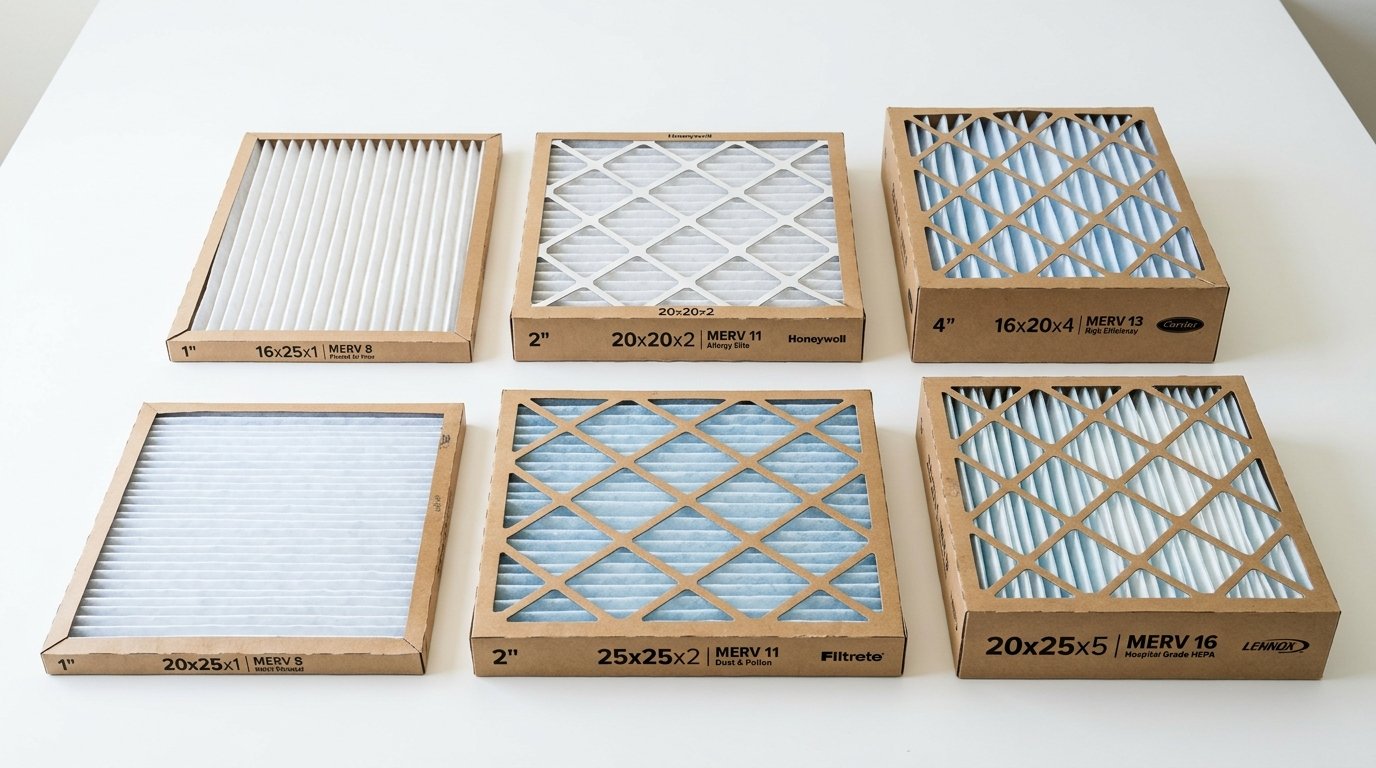
The best choice for most homes. The pleated design creates more surface area, catching more particles at each efficiency level while maintaining acceptable airflow. Available in 1-inch, 2-inch, and 4-inch thicknesses — thicker filters last longer between changes.
Electrostatic (MERV 8–10, washable)
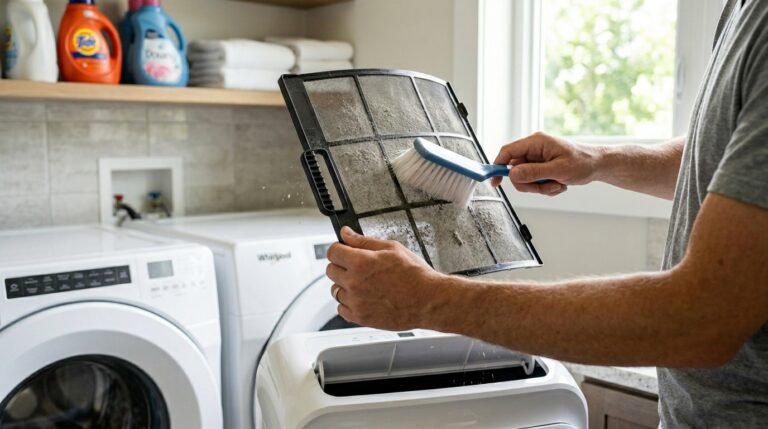
Washable filters that use static electricity to attract particles. Cost more upfront but can last years. Require monthly washing and complete drying before reinstallation — a damp filter becomes a mold farm. Good for allergy households willing to maintain them.
4-Inch Pleated (MERV 10–13)
Four-inch filters have dramatically more surface area than 1-inch filters, which means better filtration at lower static pressure. They also last 6–12 months instead of 1–3 months. Requires a compatible filter housing — not all systems can accommodate 4-inch filters without modification.
Best HVAC Air Filters of 2026
Best Overall: Filtrete 1500 MPR (MERV 12)
The Filtrete 1500 is the best all-around filter for most homes. It captures pet dander, smoke, and fine particles at MERV 12 performance while maintaining adequate airflow in most standard residential systems. Widely available in standard sizes. Replace every 90 days.
Best for Allergies: Nordic Pure MERV 12 Pleated
Nordic Pure makes some of the highest-quality pleated filters on the market. The MERV 12 version captures particles down to 1 micron and is made in the USA. Independent testing consistently places it at or above its rated performance. Buy in subscription packs to reduce cost.
Best Budget: Flanders PrecisionAire MERV 8
If your HVAC system has static pressure limitations or you just want reliable basic protection, the Flanders PrecisionAire MERV 8 delivers solid performance at a low price. Buy the 6-pack to reduce per-filter cost and have replacements on hand.
Best 4-Inch Filter: Lennox X6672 Healthy Climate
For systems with 4-inch filter housings, Lennox’s Healthy Climate filter delivers MERV 11 performance with a 6–12 month replacement interval. The large surface area means minimal airflow restriction despite the high efficiency rating. Works with any 4-inch housing, not just Lennox systems.
Best Washable: Honeywell Home FPR 9 Electrostatic
Honeywell’s washable filter is the most reliable option in the electrostatic category. It captures particles down to 3 microns and can last several years with proper monthly cleaning. Strong brand support and widely available replacement options.
How to Choose the Right Filter Size
Filter size is printed on the cardboard frame of your existing filter: length × width × depth (e.g., 16×25×1). Always match this size exactly. A filter that’s too small leaves gaps; one that’s too large won’t fit properly. If you can’t find your current filter, measure the filter slot opening and subtract 1/4 inch from each dimension.
For step-by-step instructions on swapping your filter, see our complete AC filter replacement guide.
The MERV rating system is defined in ASHRAE Standard 52.2, the industry benchmark for air filter performance. All MERV ratings — regardless of brand — are measured against this same standard.
The EPA’s guide to air filters in the home explains the relationship between filter efficiency and indoor air quality, and clarifies when high-MERV filters are beneficial versus potentially counterproductive.
Frequently Asked Questions
What MERV rating is best for home HVAC?
MERV 8 to 11 is best for most homes. MERV 8 handles dust and pet dander. MERV 11–12 adds mold spores and fine particles. MERV 13+ requires a compatible HVAC system.
What is the difference between MERV, MPR, and FPR?
MERV is the ASHRAE industry standard. MPR is 3M’s rating (MPR 1500 ≈ MERV 12). FPR is Home Depot’s rating (FPR 10 ≈ MERV 11–12). Use MERV for cross-brand comparisons.
Are washable HVAC filters worth it?
Yes for committed households — washable filters last years but require monthly washing and complete drying. A damp filter grows mold.
Can I use a MERV 13 filter in my home?
Only if your HVAC is designed for it. MERV 13 restricts more airflow. Using it in a system designed for MERV 8 can cause coil icing and blower stress.