AC Not Blowing Cold Air? Here’s How to Fix It (Step-by-Step)
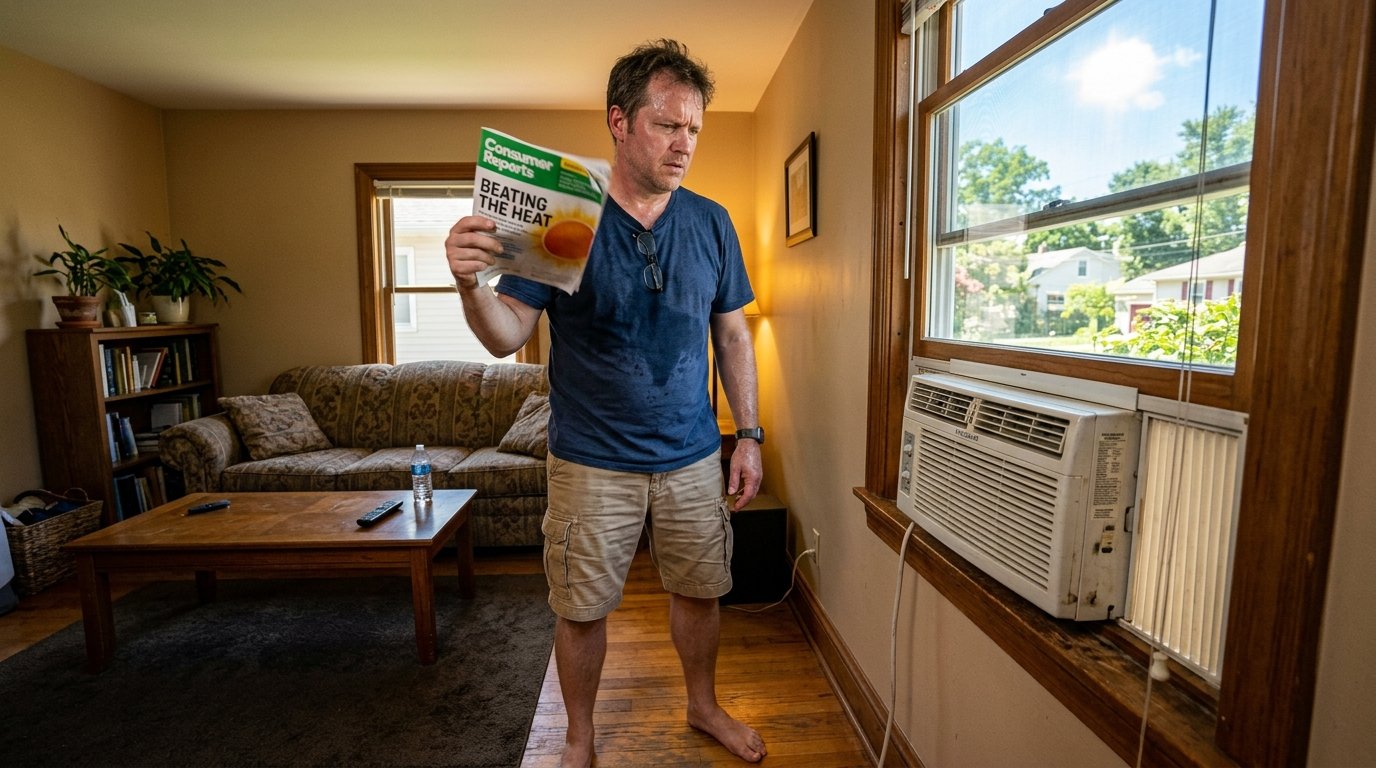
Few things are more frustrating than an AC that runs but blows warm air on a hot day. The good news: most causes of poor cooling performance are fixable without a service call. This guide walks through every common cause, from the simple fixes you can handle in five minutes to the situations where you genuinely need a technician.
Start Here: Quick Checks Before Anything Else
- Check the thermostat setting: Make sure it’s set to “Cool,” not “Fan.” The fan-only setting circulates air without activating the compressor — so air comes out but it’s not cold.
- Check the temperature setpoint: If the setpoint is above the current room temperature, the compressor won’t run.
- Check the thermostat batteries: A low battery can cause erratic thermostat behavior. Replace them.
- Verify the breaker: A tripped breaker for the outdoor unit will cause the indoor fan to run (blowing uncooled air) while the compressor sits idle.
Dirty Air Filter (Most Common Cause)
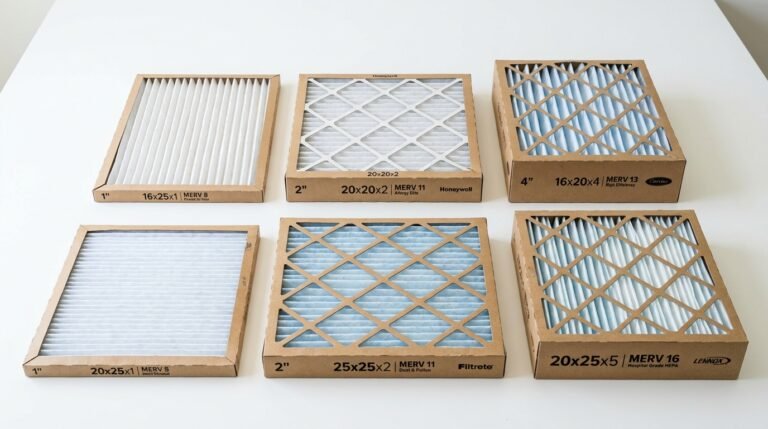
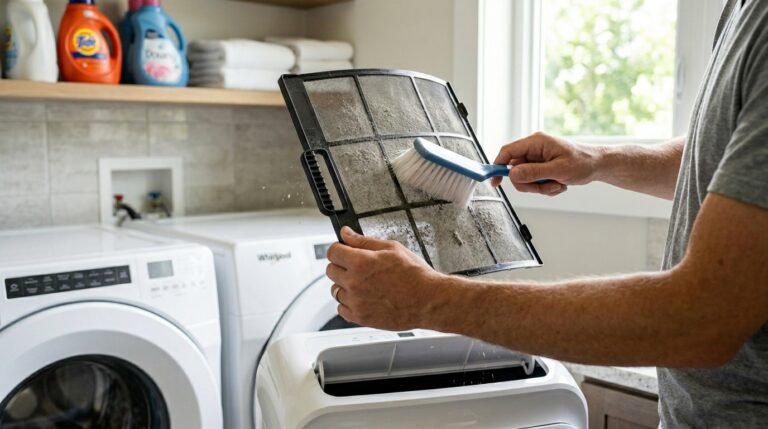
A clogged air filter restricts airflow across the evaporator coil. Without adequate airflow, the coil gets too cold and freezes over. A frozen coil can’t cool the air passing through it — so the system blows air but provides little or no cooling.
Fix: Check the filter first. If it’s gray, matted, or you can’t see light through it, replace it immediately. Then switch the system to fan-only mode for 1–4 hours to thaw the coil. Resume normal operation and monitor for re-freezing. If it freezes again after replacing the filter, there’s a secondary issue.
Prevention: Replace filters every 30–90 days depending on type. See our AC filter guide for the full schedule.
Frozen Evaporator Coil
If you can see ice on the lines running to your indoor unit, the coil is frozen. Causes include:
- Dirty air filter (most common)
- Blocked supply or return vents
- Low refrigerant
- Faulty blower motor (insufficient airflow)
Fix: Turn off cooling mode but leave the fan running. Let the coil thaw completely (1–4 hours). Address the root cause before running cooling again. If the coil re-freezes after correcting airflow issues, you likely have a refrigerant problem.
Low Refrigerant
Refrigerant is the chemical that actually moves heat in your AC system. Low refrigerant is always caused by a leak — the system doesn’t consume refrigerant, it circulates it. Signs of low refrigerant:
- AC runs but cooling is weak or inconsistent
- Ice forming on the refrigerant lines or coil
- Hissing or bubbling sounds from the refrigerant lines
- Higher-than-normal electric bills despite less cooling output
Fix: This requires a licensed HVAC technician. Refrigerant handling is federally regulated, and simply adding refrigerant without finding and fixing the leak is a temporary fix at best. A technician will locate the leak, repair it, and recharge the system to the correct level.
Dirty Condenser Coils
The outdoor unit’s condenser coils release heat from your home to the outside. If they’re caked with dirt, grass clippings, or debris, heat transfer is impaired — the system runs but can’t expel heat efficiently, resulting in poor cooling performance.
Fix: Turn off the system. Gently rinse the condenser coils with a garden hose, spraying from the inside out to push debris outward. Use a coil cleaning spray for heavy buildup. Straighten bent fins with a fin comb. Keep plants and shrubs at least 18 inches from the unit.
Faulty Compressor
The compressor is the heart of the refrigeration system. If it’s failing or has failed, the system will run without cooling. Signs:
- Outdoor unit hums but the fan doesn’t start (hard start issue)
- Outdoor unit runs but compressor is hot to the touch and doesn’t cycle normally
- Circuit breaker for the outdoor unit keeps tripping
Fix: Compressor failure requires a technician. On systems older than 10 years, compressor replacement often costs more than a new system — get a quote for both before deciding.
Wrong System Size
An undersized AC will run continuously without ever reaching the setpoint, especially on very hot days. This isn’t a repair issue — it’s a capacity issue. Verify your system size is appropriate for your home’s square footage, ceiling height, and insulation level. If you’ve recently added square footage, finished a basement, or made other changes that increased heat load, your existing system may simply not be adequate anymore.
Blocked Vents or Registers
Closed or blocked supply vents reduce airflow and can cause the evaporator coil to freeze. Check that all supply and return vents throughout the home are open and unobstructed by furniture, rugs, or drapes. Contrary to common belief, closing vents to “redirect” air to other rooms actually increases static pressure and reduces overall system efficiency.
When to Call a Technician
Call a professional if:
- You’ve replaced the filter, thawed the coil, and it refreezes — refrigerant leak suspected
- The outdoor unit isn’t running at all (electrical or compressor issue)
- The circuit breaker keeps tripping for the AC
- You hear hissing, banging, or grinding from the outdoor unit
- The system is more than 15 years old and having recurring issues
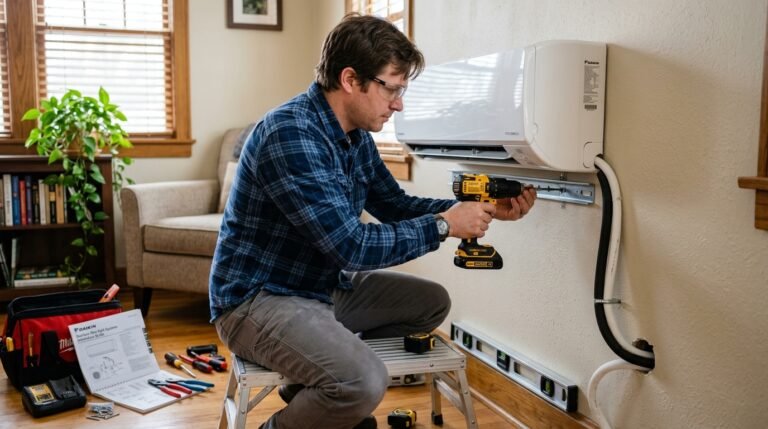
If your system needs replacement, check out our guides on the best ductless mini split systems and air source heat pumps — both are far more efficient than older central AC systems.
Refrigerant issues must be handled by a certified technician — it’s the law. EPA Section 608 regulations prohibit untrained individuals from purchasing or venting refrigerants, with penalties up to $44,539 per day per violation.
While troubleshooting your AC, it’s worth reviewing ENERGY STAR’s tips for cooling your home efficiently — simple changes like sealing air leaks and adding insulation can reduce the load on your AC system significantly.
Frequently Asked Questions
Why is my AC running but not cooling the house?
Most common reasons: clogged air filter, frozen evaporator coil, dirty condenser coils, low refrigerant from a leak, or an undersized system. Check and replace the filter first — it fixes the problem in most cases.
How do I unfreeze my AC coil?
Switch from cooling to fan-only mode. Let the coil thaw 1–4 hours. Fix the root cause (dirty filter, blocked vents). If it refreezes, call a technician — you likely have a refrigerant leak.
Can I add refrigerant to my AC myself?
No — refrigerant handling requires EPA 608 certification. Also, adding refrigerant without fixing the leak is only a temporary fix.
How do I clean my AC condenser coils?
Turn off the system. Rinse coils with a garden hose spraying from inside out. Use coil cleaner spray for heavy buildup. Straighten fins with a fin comb.
When should I call an HVAC technician?
Call if: coil refreezes after fixing airflow, outdoor unit isn’t running, breaker keeps tripping, you hear hissing or banging, or the system is over 15 years old with recurring issues.