Window AC Not Working? Common Problems and How to Fix Them
Window air conditioners are reliable workhorses, but they do have common failure points. Before you haul the unit to the curb or call a tech, run through this troubleshooting guide — most window AC problems have straightforward fixes you can handle yourself.
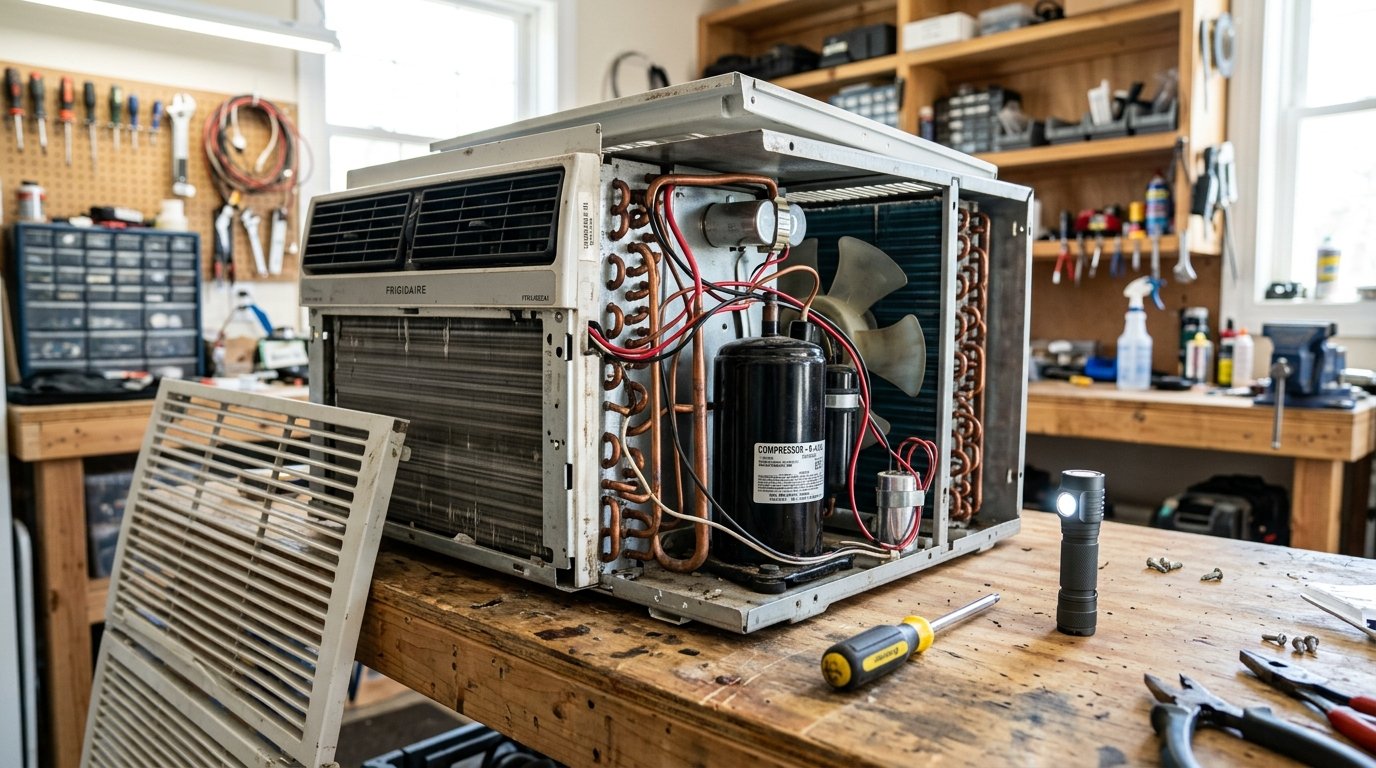
Window AC Not Cooling
1. Dirty or Clogged Air Filter
This is the most common cause of poor cooling performance. A clogged filter restricts airflow across the evaporator coil, causing the coil to freeze over and cooling output to drop dramatically.
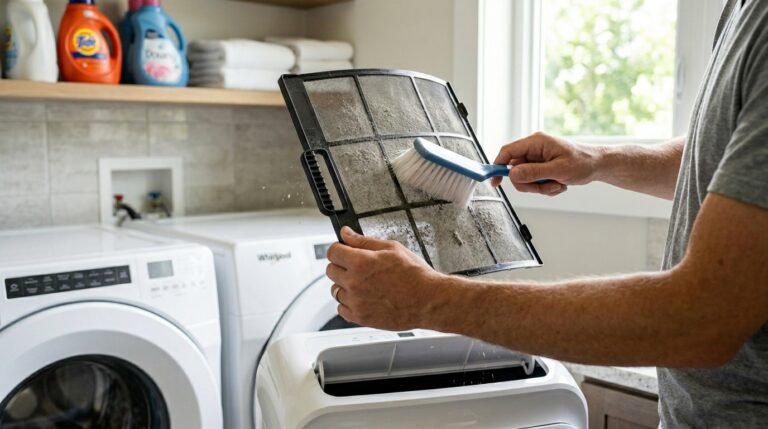
Fix: Remove the front panel and slide out the filter. Wash it under running water, let it dry completely, and reinstall. Do this every 2–4 weeks during heavy use.
2. Frozen Evaporator Coil
If you see ice on the coils or the unit blows air but doesn’t cool, the evaporator coil has likely frozen.
Fix: Turn the unit off (but leave the fan running) to thaw the coil — this takes 1 to 4 hours. Then check for the root cause: dirty filter, blocked airflow, or low refrigerant. If it freezes again after cleaning the filter and ensuring proper airflow, you likely have a refrigerant leak that requires a technician.
3. Dirty Condenser Coils
The coils on the outside of the unit release heat. If they’re caked with dirt, leaves, or debris, the unit can’t expel heat efficiently.
Fix: With the unit unplugged, use a soft brush or coil cleaning spray to clean the fins on the outdoor-facing side. Straighten any bent fins with a fin comb.
4. Undersized Unit
If the AC runs constantly but the room never cools down, the unit is too small for the space. A 5,000 BTU unit can handle roughly 150 square feet; a 10,000 BTU unit handles up to 450 square feet.
Fix: Upgrade to a higher BTU unit, or reduce heat load by improving insulation, blocking direct sunlight with blackout curtains, or reducing heat-generating appliances in the room.
Window AC Not Turning On
1. Tripped Circuit Breaker or Blown Fuse
Window ACs draw significant amperage at startup. A shared circuit can trip the breaker.
Fix: Check your panel for a tripped breaker. Reset it. If it trips again immediately, there’s an electrical issue that needs inspection. Ideally, window ACs should be on a dedicated 15-amp circuit.
2. Faulty or Tripped Reset Button
Many window ACs have a built-in reset button on the power cord plug or the unit itself.
Fix: Press the “Reset” button on the plug or unit. Wait 30 seconds, then press “Test” to restore power.
3. Faulty Thermostat or Controls
If the controls are unresponsive or the unit cycles on and off erratically, the thermostat or control board may be failing.
Fix: Try resetting the unit by unplugging for 60 seconds. If the problem persists, a control board replacement may be needed — usually not cost-effective on older units.
Window AC Leaking Water Inside
Some condensate dripping outside is normal. Water dripping inside is not.
Improper Tilt
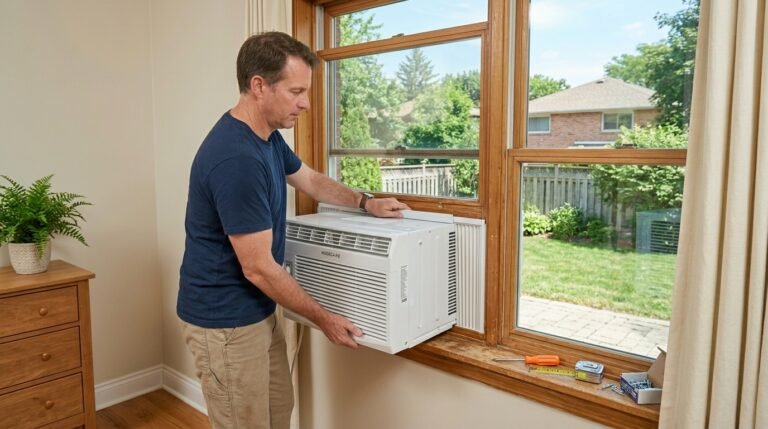
Window ACs must tilt slightly backward (toward the outside) so condensate drains out rather than in. The tilt should be about 1/4 inch over the unit’s depth.
Fix: Reinstall the unit with a slight backward tilt. Use a level to verify, then check again after a few hours of operation.
Clogged Drain Hole
Most window ACs have a drain hole or channel in the base pan that can get clogged with debris.
Fix: Unplug the unit and clear the drain hole with a pipe cleaner or compressed air.
Window AC Making Noise
- Rattling: Loose screws, vibrating panels, or debris in the unit. Tighten all screws; check for leaves or dirt inside the unit.
- Squealing: Fan belt slipping (older units) or a fan blade hitting the housing. A technician can replace the belt or realign the fan.
- Banging: Compressor mounting may be loose or failing. If the compressor is the issue on an older unit, replacement is usually more cost-effective.
- Clicking at startup: Normal. If clicking continues while running, the relay switch may be failing.
When to Replace Instead of Repair
Window ACs have a useful life of 10 to 15 years. Apply this rule: if the repair cost exceeds 50% of the cost of a new unit, replace it. Compressor failure in particular is rarely worth repairing on units under 8,000 BTU.
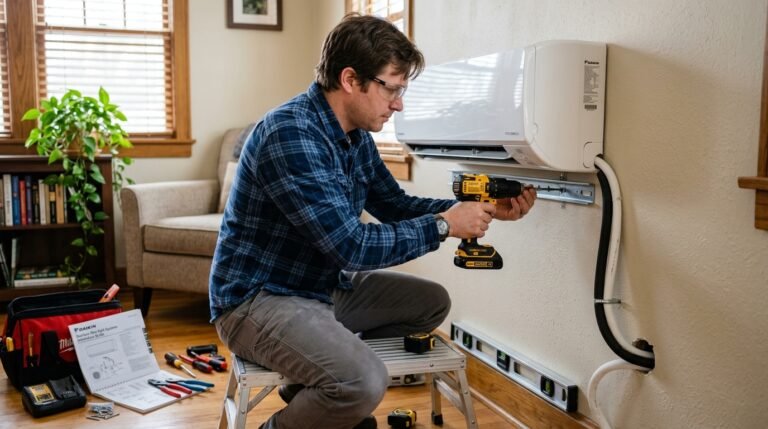
If you’re shopping for a replacement, see our best portable air conditioners guide — or consider upgrading to a mini split for whole-room heating and cooling year-round.
If your troubleshooting points to a refrigerant leak, note that handling refrigerants is regulated by the EPA’s guidance on refrigerants under Section 608 of the Clean Air Act — only EPA-certified technicians can legally purchase and handle refrigerant.
If your window AC is more than 10 years old and needs major repairs, replacing it with an ENERGY STAR certified room air conditioner will use at least 10% less energy and often pays back in 2–3 cooling seasons.
Frequently Asked Questions
Why is my window AC running but not cooling?
Most common causes: dirty air filter, frozen evaporator coil, dirty condenser coils, or an undersized unit. Start by replacing the air filter.
Why is my window AC leaking water inside?
The unit isn’t tilted correctly — it must tilt slightly backward about 1/4 inch so condensate drains outward. Also check for a clogged drain hole.
Why won’t my window AC turn on?
Check for a tripped circuit breaker or press the Reset button on the power plug. Wait 30 seconds then press Test.
What does rattling from a window AC mean?
Rattling usually means loose screws, vibrating panels, or debris inside the unit. Tighten all screws and check for debris inside.
When should I replace instead of repair my window AC?
If the repair cost exceeds 50% of a new unit’s cost, replace it. Units over 10–15 years with recurring problems are good candidates for replacement.