How to Replace Your Air Conditioner Filter (Step-by-Step Guide)
A dirty air conditioner filter is one of the most common — and most overlooked — reasons an AC underperforms. Replacing it takes less than five minutes, costs almost nothing, and can cut your energy bill by up to 15%.
Why Changing Your AC Filter Matters
Your AC filter traps dust, pollen, pet dander, and other airborne particles before they reach the evaporator coil. When the filter gets clogged, airflow drops, energy costs rise, and the coil can freeze over. A neglected filter also becomes a source of mold and bacteria that circulate through your home.
How Often Should You Replace Your AC Filter?
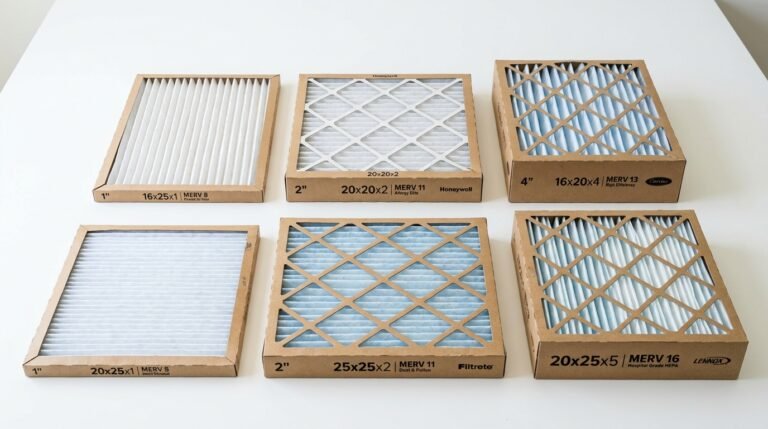
- 1-inch fiberglass filters: Every 30 days
- 1-inch pleated filters: Every 60–90 days
- 4-inch pleated filters: Every 6–12 months
- HEPA filters: Every 12–18 months (check manufacturer specs)
Change more frequently if you have pets, allergies, or live in a dusty area. A good rule: check monthly and replace when you can’t see light through the filter.
Understanding MERV Ratings
MERV (Minimum Efficiency Reporting Value) runs from 1 to 20 — higher numbers trap smaller particles. For most homes, a MERV 8 to 11 pleated filter hits the sweet spot between filtration quality and airflow.
| MERV Rating | What It Filters | Best For |
|---|---|---|
| 1–4 | Large dust, carpet fibers | Basic protection |
| 5–8 | Mold spores, dust mites, pet dander | Most residential homes |
| 9–12 | Fine dust, auto emissions | Allergy households |
| 13–16 | Bacteria, smoke, virus carriers | Superior air quality |
Types of AC Filters
Fiberglass Filters
The cheapest option. They protect equipment from large particles but do little for air quality. Replace monthly. Good for older systems with low static pressure ratings.
Pleated Filters
The best choice for most homeowners. The accordion-style design creates more surface area, trapping more particles without blocking airflow. Prices range from $5 to $25 depending on size and MERV rating.
Electrostatic Filters
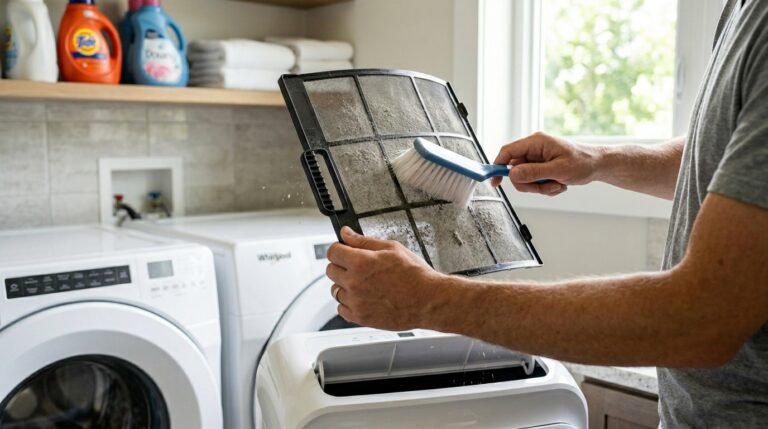
These use static electricity to attract particles. Washable versions are cost-effective long-term but require monthly cleaning — skip a cleaning and they lose effectiveness fast.
HEPA Filters
HEPA filters capture 99.97% of particles 0.3 microns or larger. They’re excellent for air quality but aren’t compatible with most residential HVAC systems without a bypass or dedicated housing.
How to Replace Your AC Filter: Step by Step
Step 1: Turn Off the System
Turn your thermostat to “Off” before starting. This prevents the system from pulling in unfiltered air while the filter is out.
Step 2: Locate the Filter
Most central AC systems have the filter in the return air vent (a large grate on the wall or ceiling) or inside the air handler unit near the furnace.
Step 3: Remove the Old Filter
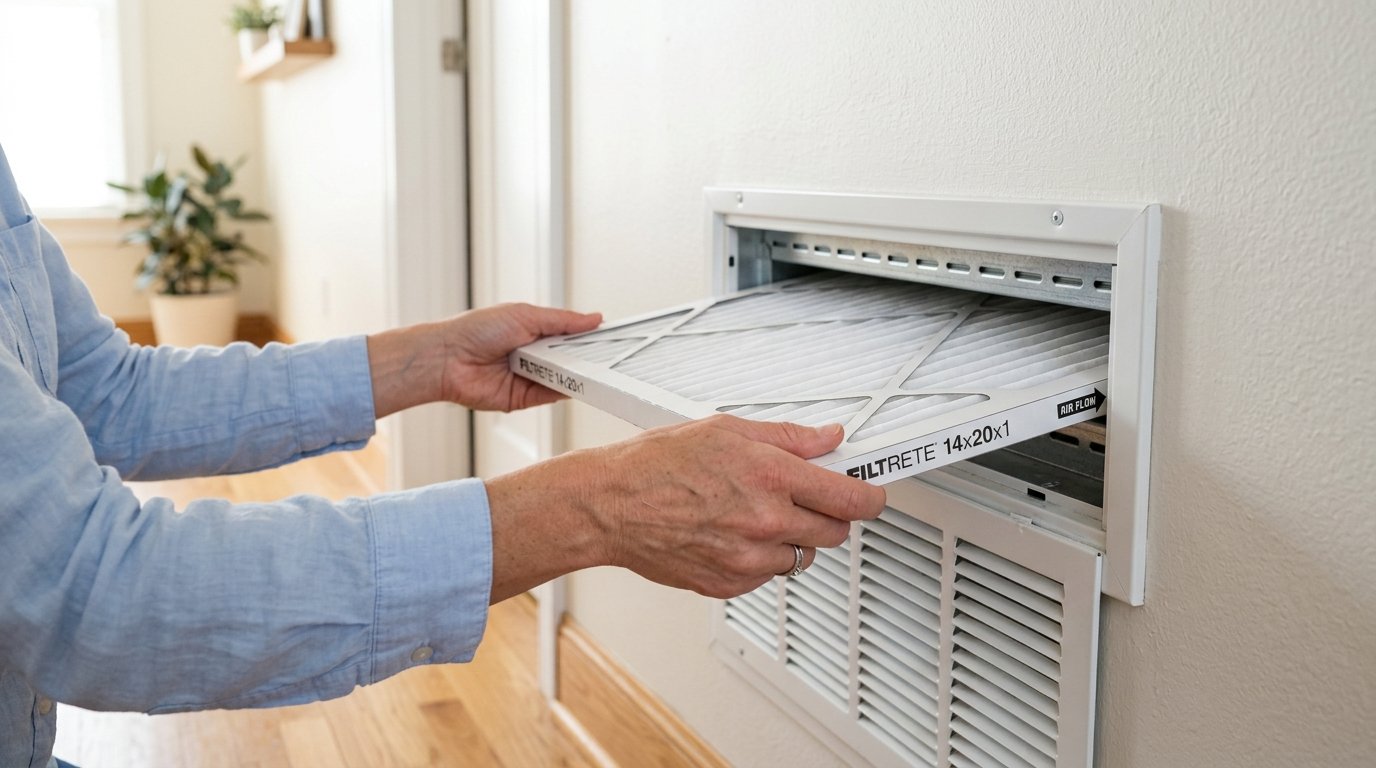
Open the vent cover and slide out the old filter. Hold it over a trash bag. Note the size printed on the cardboard frame (e.g., 16x25x1) and the airflow direction arrow.
Step 4: Clean the Filter Slot
Use a vacuum or dry cloth to remove dust buildup inside the slot. Dirty slots deposit dust directly onto your new filter on day one.
Step 5: Insert the New Filter
Slide the new filter in with the arrow pointing toward the blower (away from the return air duct). An arrow pointing the wrong way dramatically reduces effectiveness. The filter should fit snugly with no gaps around the edges.
Step 6: Restart the System
Replace the cover, turn the system back on, and mark your calendar for the next replacement.
Signs Your Filter Needs Immediate Replacement
- Visible gray or brown buildup on the filter surface
- Reduced airflow from your vents
- Higher-than-normal energy bills
- Ice forming on the refrigerant lines or evaporator coil
- Musty smell when the AC runs
- Increased allergy symptoms indoors
Best AC Filters to Buy in 2026
- Filtrete 1900 MPR (MERV 13): Outstanding filtration for allergy households. Captures smoke, bacteria, and virus carriers.
- Nordic Pure MERV 12: Excellent balance of filtration and airflow. Top pick for most homes.
- Honeywell Home MicroDefense (MERV 11): Reliable, widely available, great for pet owners.
- Flanders PrecisionAire (MERV 8): Budget-friendly for basic protection. Buy in bulk to save.
Common Mistakes to Avoid
- Installing the filter backwards: The arrow must point toward the blower, not toward the return air.
- Wrong size: Measure the old filter before buying — gaps let unfiltered air bypass it entirely.
- Too-high MERV rating: A MERV 16 filter in a system designed for MERV 8 starves the system of airflow.
- Forgetting to change it: Write the next change date on the filter frame with a marker.
For more ways to improve your home’s comfort and efficiency, see our best mini split systems review and best portable AC guide.
The MERV rating system comes from ASHRAE Standard 52.2, the industry benchmark for measuring and expressing air filter performance in HVAC systems.
Air filtration plays a key role in overall home health. The EPA’s indoor air quality resources identify particulate matter from dust, pollen, and pet dander as primary indoor pollutants that quality air filters help control.
Frequently Asked Questions
How often should you replace your air conditioner filter?
Replace 1-inch pleated filters every 60–90 days, fiberglass filters every 30 days, and 4-inch pleated filters every 6–12 months.
What MERV rating should I use for my home?
MERV 8 to 11 is best for most homes — it traps dust, pet dander, and mold spores without restricting airflow.
Can a dirty air filter damage my AC?
Yes. A clogged filter restricts airflow, causing the evaporator coil to freeze and potentially damaging the blower motor.
Which direction does the air filter arrow point?
The arrow must point toward the blower, away from the return air duct.