Best Portable Space Heaters of 2026: Tested and Ranked
A portable space heater can cut your heating bill by letting you warm only the rooms you’re actually using instead of heating the whole house. But not all heaters are created equal — efficiency, safety features, and heating technology vary significantly. Here are the best options for 2026.
Types of Portable Space Heaters
Infrared (Radiant) Heaters
Infrared heaters warm objects and people directly rather than heating the air. They feel warm instantly and don’t dry out the air. Best for: spot heating in garages, workshops, or rooms where you’re sitting in one place. Less effective in drafty spaces.
Ceramic Heaters
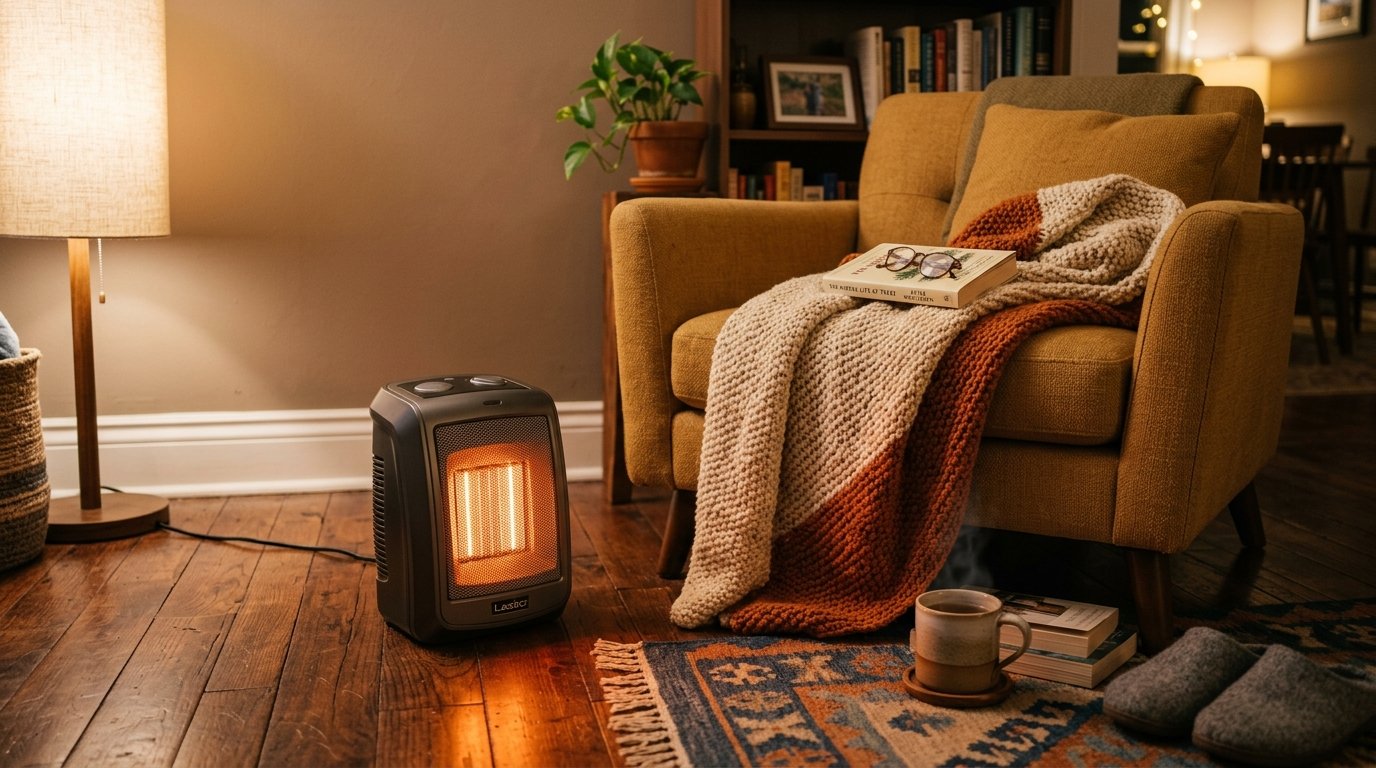
Ceramic heating elements warm up fast and have a built-in safety advantage — the ceramic surface stays cooler than metal elements, reducing fire risk. A fan distributes heat throughout the room. Best for: bedrooms, home offices, and small living rooms.
Oil-Filled Radiators
These look like old-fashioned radiators and use heated oil to radiate warmth. They heat slowly but maintain temperature efficiently and silently — ideal for bedrooms. They stay warm for a while after being switched off, which saves energy.
Micathermic Heaters
A combination of radiant and convection heating. They warm up faster than oil-filled radiators and are thinner and lighter. Good for living rooms where you want even heat without the noise of a fan.
Best Portable Space Heaters of 2026
Best Overall: Dreo Space Heater H3
The Dreo H3 checks every box: fast heating, quiet operation (45 dB), tip-over and overheat protection, and a clean digital display. It heats a 200-square-foot room in about 3 minutes at full power. The oscillation feature distributes heat evenly. Competitive pricing makes it our top pick.
Best for Bedrooms: De’Longhi TRD40615E Oil-Filled Radiator
Completely silent — you won’t hear it at all. The thermal cutoff keeps the surface temperature safe for households with kids or pets. It takes 20–30 minutes to reach full warmth, but it maintains temperature efficiently overnight. The 24-hour timer is a useful feature.
Best for Garages: Dr. Infrared Heater DR-988A
At 5,600 watts (240V), this infrared heater is designed for garages, workshops, and larger spaces. It heats up to 1,000 square feet and is built to commercial durability standards. Requires a 240V outlet — most garages have one.
Best Budget: Pelonis HPS20L
Under $40 and surprisingly capable for small rooms. Ceramic element, two heat settings (750W and 1,500W), and tip-over protection. Doesn’t have oscillation or a digital display, but it heats reliably. Good for dorm rooms, small offices, or bathrooms.
Best Smart Heater: Dyson Hot+Cool HP09
The Dyson HP09 heats, cools, and purifies air with a HEPA+carbon filter. It connects to the Dyson app, works with Alexa and Google Home, and has a built-in air quality monitor. It’s expensive — but it’s four devices in one.
Safety Features to Look For
- Tip-over protection: Automatically shuts off if the heater is knocked over. Non-negotiable.
- Overheat protection: Shuts off if internal temperatures reach dangerous levels.
- Cool-touch housing: Important if children or pets are in the space.
- UL or ETL certification: Confirms the heater has been tested to safety standards.
- Auto shut-off timer: Lets you fall asleep without worrying about leaving it on.
How Much Do Space Heaters Cost to Run?
A standard 1,500-watt heater running 8 hours per day costs roughly $1.44 per day at the national average electricity rate of $0.12/kWh. That’s about $43 per month. Infrared and oil-filled heaters are often more efficient than ceramic fan heaters at maintaining temperature, which can reduce that cost.
Space Heater Buying Tips
- Match wattage to room size: 10 watts per square foot is a common rule of thumb.
- Don’t run space heaters from extension cords — plug directly into a wall outlet.
- Keep heaters at least 3 feet from flammable materials.
- Never leave a space heater running unattended for extended periods.
If your heating needs go beyond a single room, a ductless mini split heat pump is a far more efficient solution. See our best ductless heating and cooling systems guide for a full comparison.
Before buying any space heater, review the U.S. Consumer Product Safety Commission space heater safety tips — portable heaters are involved in about 1,700 residential fires per year, making proper usage and safety features critical.
The DOE’s guide to electric space heating notes that space heaters are most cost-effective when used to heat one or two rooms while keeping the rest of the house at a lower temperature.
Frequently Asked Questions
What is the best type of space heater for a bedroom?
Oil-filled radiators are best for bedrooms — completely silent with cool-touch surfaces safe for kids and pets.
How much does it cost to run a space heater?
A 1,500-watt heater running 8 hours/day costs roughly $1.44/day at $0.12/kWh — about $43 per month.
Are space heaters safe to leave on overnight?
Only use heaters with auto shut-off timers and tip-over protection. Most safety experts recommend not leaving them unattended long-term.
What wattage space heater do I need?
A general rule is 10 watts per square foot. For a 150 sq ft room, a 1,500W heater is sufficient.